
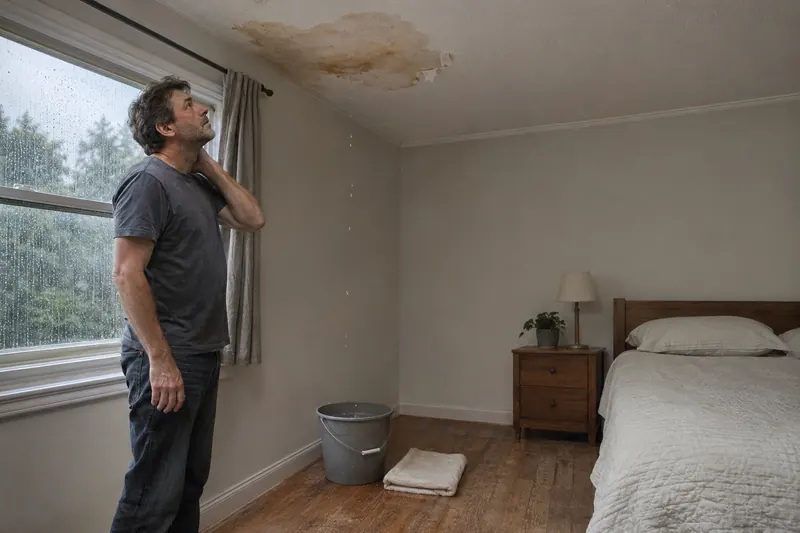
Roof leak repair
Roof leak repair: what to do now and who to call
A drip from the ceiling, a spreading stain, or damp insulation usually means water is getting in somewhere above. A roofer can trace where it enters and recommend a repair.
No number is listed yet. Once the phone line is active, you’ll be able to call from this page to be connected with an independent roofer who serves your area.
Roof Repair Line is a free referral service, not a roofing contractor. Calls are connected to independent roofing companies. Roof Repair Line doesn’t inspect or repair roofs, and provider availability varies by location and time of day.
Signs
Signs your roof may be leaking
Some signs are obvious; others show up slowly. Check from inside the house. You don’t need to go on the roof.
- Water dripping from a ceiling or light fixture during or after rain
- Brown or yellow stains on the ceiling or upper walls that grow over time
- Bubbling or peeling paint near the ceiling
- Damp or matted insulation, or wet wood, seen from the attic hatch
- A musty smell in an upstairs room or closet
- Daylight showing through roof boards from the attic
Water often enters at one spot and shows up somewhere else. It can run along the underside of the roof, the rafters, or ceiling insulation before it finds a place to drip. University of Minnesota Extension describes water that “could flow into exterior walls or through the ceiling insulation and stain the ceiling finish.” [2]
That’s why patching the ceiling, or the shingles right above a stain, doesn’t always stop a leak. Tracing the entry point is part of a roofer’s job.
Right now
What to do right now
Focus on safety and limiting damage inside. Leave the roof itself to professionals.
Keep people away from a bulging ceiling
A ceiling that sags or bulges may be holding water. Keep everyone out from under it and let a professional decide how to handle it.
Be careful with water and electricity
Don’t touch electrical equipment if it’s wet or if you’re standing in water. Turn off the electricity only if it’s safe to do so. [4]
Catch the water and protect belongings
Set out buckets or containers, lay down towels, and move furniture, electronics, and valuables away from the drip.
Stay off the roof
Wet roofs are slippery, and OSHA warns that working six feet or more above a lower level carries a risk of serious injury or death from a fall. [5]
Note what you see
Photograph stains and drips, and write down when the leak started and what the weather was doing. It helps the roofer narrow down the cause.
Causes
Common reasons roofs leak
A roofer will confirm the actual cause. These are possibilities, not a diagnosis.
Flashing problems
Flashing seals the joints where the roof meets a wall, chimney, skylight, or vent. The DOE Building America Solution Center calls roof-wall intersections “a critical point for flashing to prevent water leaks and damage.” [1]
Damaged or missing shingles
Cracked, lifted, or missing shingles can let water reach the layers underneath, especially after wind. See storm damage roof repair.
Vents and pipes
Plumbing vents, exhaust vents, and other openings each need a watertight seal that can wear or crack over time.
Roof valleys
Where two slopes meet, valleys carry water from both sides, so they’re worth checking when tracing a leak.
Ice dams (cold climates)
Ice at the roof edge can trap melting snow, and the water behind it “can leak into a home and cause damage to walls, ceilings, insulation.” [2]
Moisture that isn’t a leak
In cold weather, warm indoor air can condense on cold attic surfaces such as roof framing and the underside of the sheathing. [3] Plumbing leaks can also stain ceilings.
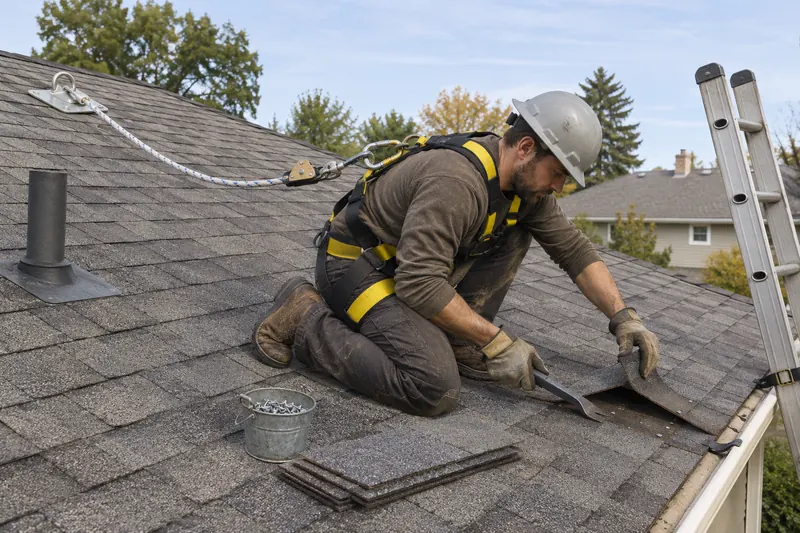
The visit
What a professional assessment may involve
- Asking when the leak appears: heavy rain, wind-driven rain, or snowmelt
- Checking the attic and the roof surface to find where water gets in
- Looking at flashing, vents, valleys, and shingles near the likely entry point
- Telling you whether temporary protection is needed before a permanent repair
- Explaining repair options and giving a written scope of work and price
Methods vary by company. Ask the roofer how they’ll inspect your roof and what their findings mean.
Options
Temporary protection vs. a permanent repair
Temporary protection
- Limits further water entry until a proper repair
- May involve covering the affected area
- Should be installed by a professional, not a homeowner on a wet roof
- Doesn’t fix the underlying cause
Permanent repair
- Addresses the cause, such as flashing or damaged shingles
- Scope depends on what the roofer finds
- May wait for dry weather or materials
- Ask what’s included and whether there’s a warranty
Cost
What affects the cost of a roof leak repair
Roof Repair Line can’t quote prices. Only the roofer can, after seeing the roof. Things that commonly affect scope and cost:
- How easy the leak is to trace
- Where it is: flashing, valley, vent, or open roof area
- Roof material and condition
- Roof height, pitch, and access
- Whether temporary protection is needed first
- Damage to decking or framing underneath
- Local permit requirements, if any
- Interior repairs, which are usually separate work
Have this ready when you call
- Your address or ZIP code
- Where water is showing up inside
- When it started, and whether it’s getting worse
- Whether it happens only in heavy rain, wind, or snowmelt
- Roof type, if you know it
- Any recent roof work or storm damage
FAQ
Roof leak questions
Is a roof leak an emergency?
Water coming into the house, a sagging ceiling, or water near light fixtures should be treated as urgent. A small stain that isn’t changing may be less urgent, but leaks don’t fix themselves, so have a roofer look at it.
Why is my roof still leaking after a repair?
The repair may not have reached the actual entry point, or there may be more than one. Call the company that did the work first and ask them to recheck it.
Can a ceiling stain come from something other than the roof?
Yes. Attic condensation, plumbing, and HVAC lines can all stain ceilings. A roofer can tell you if the roof isn’t the source.
Should I patch the leak myself?
Going on the roof isn’t recommended. You can limit damage from inside by catching water and moving belongings while a professional handles the roof.
Will insurance cover a roof leak?
It depends on your policy and the cause. Roof Repair Line can’t determine coverage or help with claims. Contact your insurer or agent, and keep your photos and notes.
Water coming in right now?
Once the phone line is active, you’ll be able to call from this page. Until then, follow the safe steps above.
Sources
- U.S. DOE Building America Solution Center — Flashing at Roof-Wall Intersections
- University of Minnesota Extension — Dealing with and preventing ice dams
- U.S. DOE Building America Solution Center — Condensation Control in Attics and Roofs
- Ready.gov — Floods (Staying Safe After a Flood)
- OSHA — Fall Prevention Campaign
Links open official or public sources in a new tab. Rules and guidance can change; check the source for the latest version.