
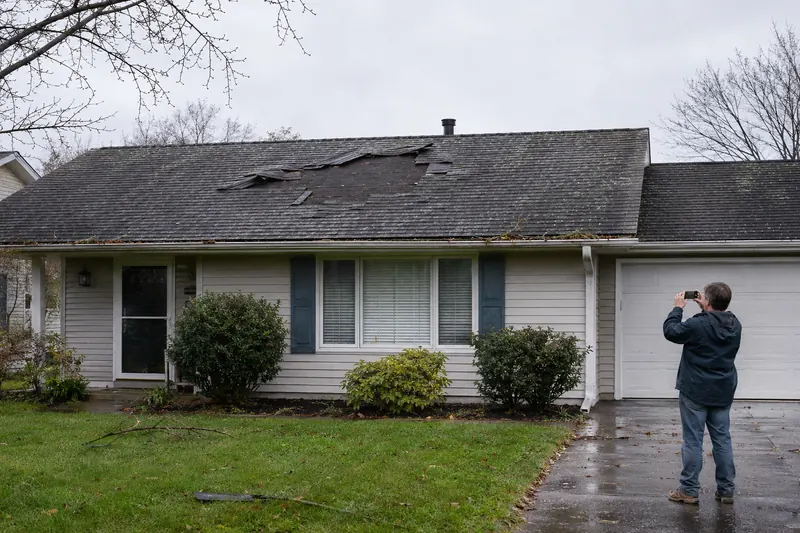
Storm and wind damage
Storm damage roof repair: what to do after high winds
High winds can tear off shingles, loosen flashing, or leave debris on the roof. Once the storm has passed, a roofer can assess the damage and help protect the house before the next rain.
No number is listed yet. Once the phone line is active, you’ll be able to call from this page to be connected with an independent roofer who serves your area.
Roof Repair Line is a free referral service, not a roofing contractor. Calls are connected to independent roofing companies. Roof Repair Line doesn’t inspect or repair roofs, and provider availability varies by location and time of day.
First
Wait for the storm to pass
Don’t go outside to look at the roof while the storm is still active. The National Weather Service advises checking your property “after you are sure the severe weather threat has ended” [1] and warns there is “no safe place outside when thunderstorms are in the area.” [2]
Assume any downed line is live. Stay at least 35 feet away, keep others back, and call 911. [3]
From the ground
Signs of wind damage you can see from the ground
Walk around the house at a safe distance. Binoculars help. Don’t climb a ladder or go on the roof. [6]
- Shingles in the yard, gutters, or driveway
- Bare spots or a different color where shingles are missing
- Shingles that look lifted, curled, creased, or out of line
- Flashing, ridge caps, or vent covers that are bent or loose
- Tree limbs or other debris on the roof
- New leaks or stains inside after the storm
Hidden risk
Why lifted shingles matter even if none are missing
Many asphalt shingles are designed to seal to the shingle below. IBHS research found that “the strength of the seal between shingles” is the most important factor in how self-sealing asphalt shingles hold up in high winds. [4] Shingles that were lifted or creased may no longer lie flat, even if they didn’t blow away.
Damaged areas can let water in. IBHS notes that wind-driven rain “can infiltrate through roofs, doors, windows.” [5] A roofer can tell you whether loose or creased shingles need attention before the next storm.
Records
Document the damage safely
- Take wide and close-up photos from the ground and from inside the house
- Photograph fallen shingles or debris where they landed before moving them, if it’s safe
- Write down the date and time of the storm and when you noticed damage
- Keep receipts for anything you spend to protect your home
- Don’t go on the roof or into a damaged attic to get photos
Options
Temporary protection vs. repair
Temporary protection
- Covers exposed areas to limit water entry
- Often needed when shingles are missing before more rain
- Should be installed by a professional
- Not a substitute for repair
Repair
- Replaces missing or damaged shingles, flashing, or vent covers
- May include fixing damaged decking underneath
- Scope depends on what the roofer finds
- Ask for a written scope of work and price
If damage is widespread, a roofer may discuss whether repair or replacement makes more sense. That’s their assessment to make with you.
Next steps
What happens after you call
Every company works differently, but the next steps usually look like this:
You’re connected with an independent roofer
If a participating company is available for your area, describe what you saw and ask about timing.
The roofer assesses the roof
They inspect the damage, decide whether temporary protection is needed, and explain repair options.
You decide how to proceed
Review the written scope and price before agreeing to any work.
Hiring
Hiring after a storm
Take your time choosing a contractor, even when you’re in a hurry. FTC consumer guidance suggests:
- Get a written contract and read it carefully
- Confirm the contractor’s license and insurance
- Don’t pay for everything up front
- Never sign your insurance check over to a contractor
Source: FTC [7]
Hail damage is harder to spot from the ground and is assessed differently. See hail damage roof repair.
FAQ
Storm damage questions
How soon should I have storm damage looked at?
If shingles are missing or water is coming in, try to get a roofer out before the next rain. Minor damage can usually be scheduled, but don’t leave it for months.
One or two shingles blew off. Does that matter?
It can. A missing shingle exposes the layers underneath to water. A roofer can replace it and check whether nearby shingles were loosened.
Should I contact my insurer or a roofer first?
That’s your choice. You can document the damage, contact your insurer, and have a roofer assess the roof in whatever order works for you. Roof Repair Line can’t tell you what your policy covers.
Can I put a tarp on the roof myself?
It isn’t recommended. Climbing a wet or damaged roof is dangerous. Ask the roofer whether temporary protection is needed.
Shingles missing after a storm?
Once the phone line is active, you’ll be able to call from this page. Until then, document the damage safely.
Sources
- National Weather Service — What to Do After Severe Weather
- National Weather Service — Lightning Safety
- Electrical Safety Foundation — Downed Power Line Safety
- IBHS — Wind Uplift of Asphalt Shingles
- IBHS — Wind-Driven Rain
- OSHA — Fall Prevention Campaign
- FTC — How To Avoid Scams After Weather Emergencies and Natural Disasters
Links open official or public sources in a new tab. Rules and guidance can change; check the source for the latest version.